What to Know
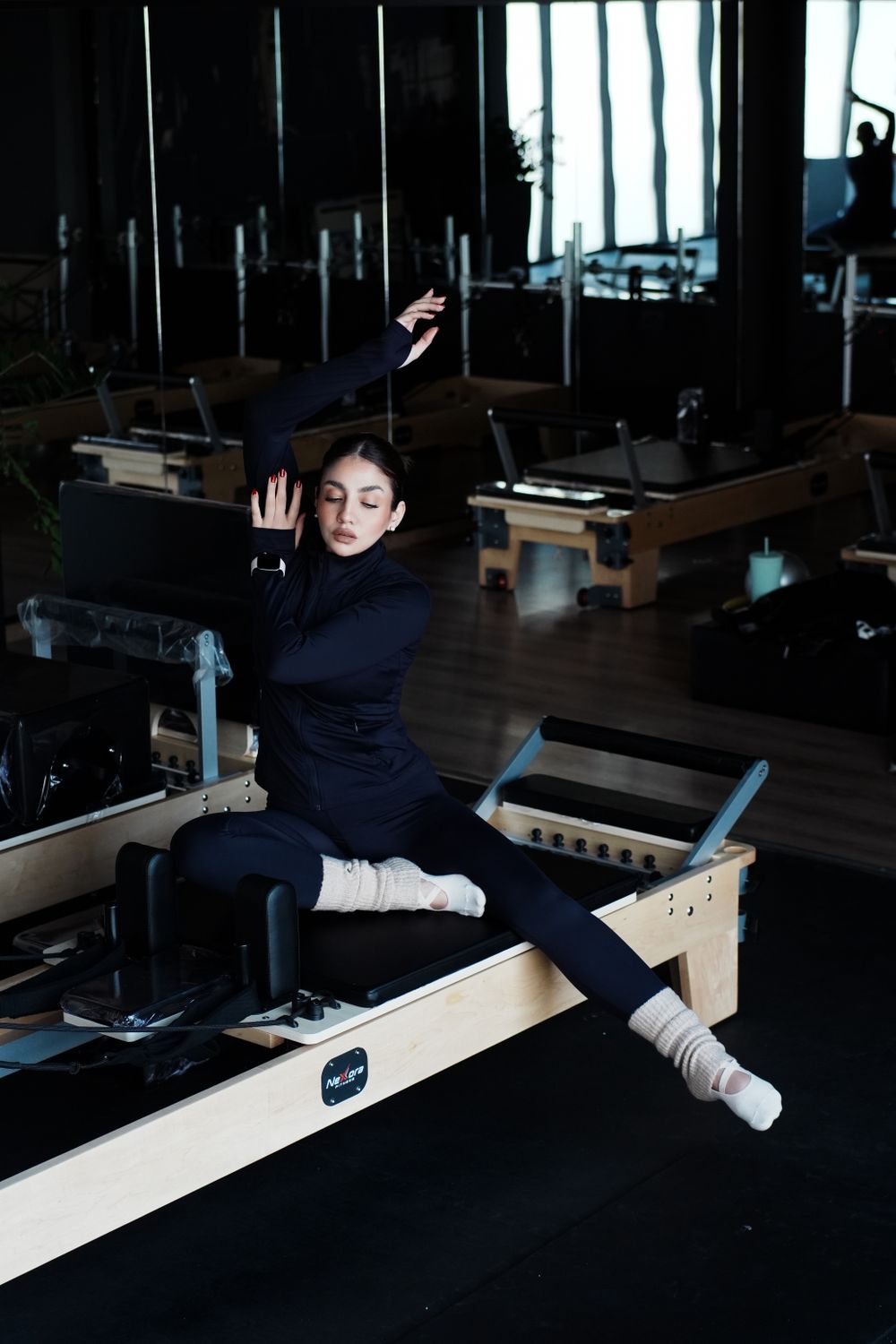
The machine is often the first thing that catches your eye in Reformer Pilates photographs. But its appearance alone cannot explain the experience. A Reformer is a piece of Pilates equipment with a moving platform, springs and different places to hold or find support. These components can serve different purposes during a class. Working on the same machine does not mean everyone will perform the same movements or follow the same sequence.
You may hear the moving platform called a carriage. The footbar is the bar used for foot support, while straps are the equipment’s handles or loops. You do not need to memorise these terms beforehand. What matters is understanding why a component is being used during the class and asking questions when you need an explanation. Getting to know the equipment provides a clearer starting point than simply trying to copy a movement from the outside.

Spring resistance is one of the Reformer’s distinguishing features. More resistance does not automatically mean a better session. The role of the springs can change with the movement: resistance or support may each be part of the experience. Copying another participant’s settings or viewing the machine only as something on which to increase weight can therefore create the wrong impression.
To understand the class, ask practical questions: How are newcomers introduced to the machine? How is guidance given? What should I do if I do not understand a movement? What is the general class flow and participation format? These questions offer more information than the class name alone. Explaining your previous movement experience and whether you have used equipment before can also help the first conversation.
A common expectation is that the machine will do all the work for you. Following guidance, bringing attention to movement and learning how to work with the equipment are also parts of the experience. At the other extreme is the idea that every session must be fast or visually impressive. A short social-media clip does not represent the pace or learning process of an entire class.
For preparation, choose clothing that allows you to move and ask about water and any class-specific items. Clarify details about socks, equipment use and arrival using the current class information. Leave enough time in your schedule to get to know new equipment without rushing. A realistic aim for the first visit is to explore the approach and the machine, rather than expect yourself to perform everything perfectly.
After the class, difficulty is not the only thing to reflect on. Could you understand the explanations, ask questions and engage with the way of working? These questions provide a useful framework for considering the next step. Rather than put Reformer in competition with other classes, think about the place it could have within your own preferences and everyday schedule.