What to Know
The phrase neutral spine can sound like one correct posture that must be found and maintained continuously. In reality, the spine and pelvis can adopt different positions for different tasks. When discussing movement with Gizem Köymen, neutrality can be treated as a reference for noticing position rather than a shape that needs correcting. This perspective includes individual anatomy, the available support and the purpose of the exercise. A position that looks symmetrical does not, by itself, establish comfort or control. Context matters as much as appearance.
Neutral describes a range rather than one universal angle
The spine normally curves forward in the neck and lumbar regions and backward through the thoracic and sacral regions. The size and distribution of these curves vary between individuals. Neutral spine usually describes an arrangement close to a person's natural structure without forcing an extreme end position. It is not a universal set of angles that every body must reproduce. Breathing, gravity and support conditions also influence its appearance. Thinking in terms of a small range is therefore often more useful than comparing every person with one photograph or outline.
The pelvis is not a fixed platform under the spine
The pelvis participates in transferring movement and forces between the spine and hip joints. Tilting it forward or backward can change the appearance of the lumbar region and the demands on nearby muscles. However, pelvic and lumbar movement do not always occur in an identical one-to-one relationship. Hip position and rib-cage behavior also contribute. An instruction to keep the pelvis steady does not necessarily mean making the whole torso rigid. Without explaining which region is a reference and which should move, the same cue can lead to very different responses.
Bony landmarks offer information rather than a verdict
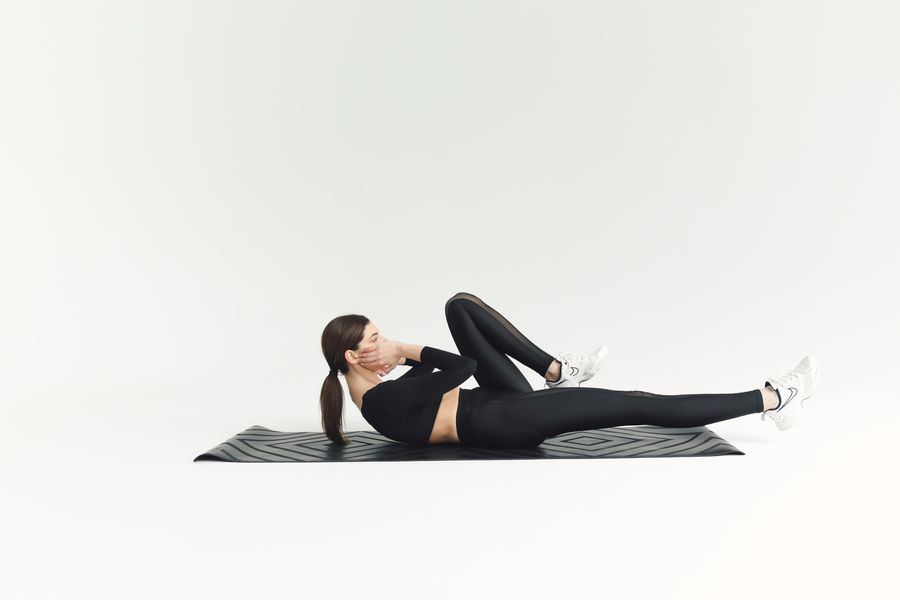
Landmarks at the front of the pelvis and the relationship between the lower back and a mat can help describe position. In a supine exercise, an imagined plane between particular pelvic points may serve as a teaching reference. Such landmarks are not equally visible in everyone because anatomy and surrounding tissues vary. A gap beneath the lower back, or the absence of one, is not independently proof of good or poor technique. These observations provide approximate external information. They do not measure joint positions with millimetric accuracy or replace a person's account of sensation.
A different support surface changes the task
Lying down, sitting and standing create different relationships with gravity. A mat, the feet or a moving equipment surface provide different kinds of contact and support. A position in which the feet rest on a surface differs mechanically from one in which the legs are held above it. The latter changes the moments acting on the trunk. Trying to maintain exactly the same spinal appearance in every condition may overlook that change in demand. A neutral reference is most meaningful when considered alongside the load and purpose of the movement.
Learning neutrality does not mean avoiding spinal movement
Pilates can involve controlled spinal flexion, extension and rotation. Recognizing a neutral position does not make those directions incorrect. Some tasks involve maintaining a particular trunk arrangement; in others, changing that arrangement is the intended movement. Saying keep neutral without explaining the goal can encourage unnecessary rigidity. Similarly, greater pelvic movement does not automatically mean loss of control if the task calls for it. Interpretation begins with understanding the intended movement and then considering how the movement being performed relates to that intention. Position alone cannot answer the whole question.
Awareness grows through clearer descriptions
A person can describe how breathing changes with pelvic position, where foot contact is felt and during which phase effort around the lower back increases. These are ways of communicating experience, not signs for making a diagnosis at home. Forcing a position to obtain one specific sensation may be less informative than trying different explanations. Pain, numbness or an unusual symptom should not be treated as a technical goal and may require appropriate assessment. When exploring class options with Gizem Köymen, sharing previous experience and expectations can be more useful than assuming a neutral posture must be perfect. Neutrality then becomes a reference for understanding movement choices rather than a list of prohibited positions.