What to Know
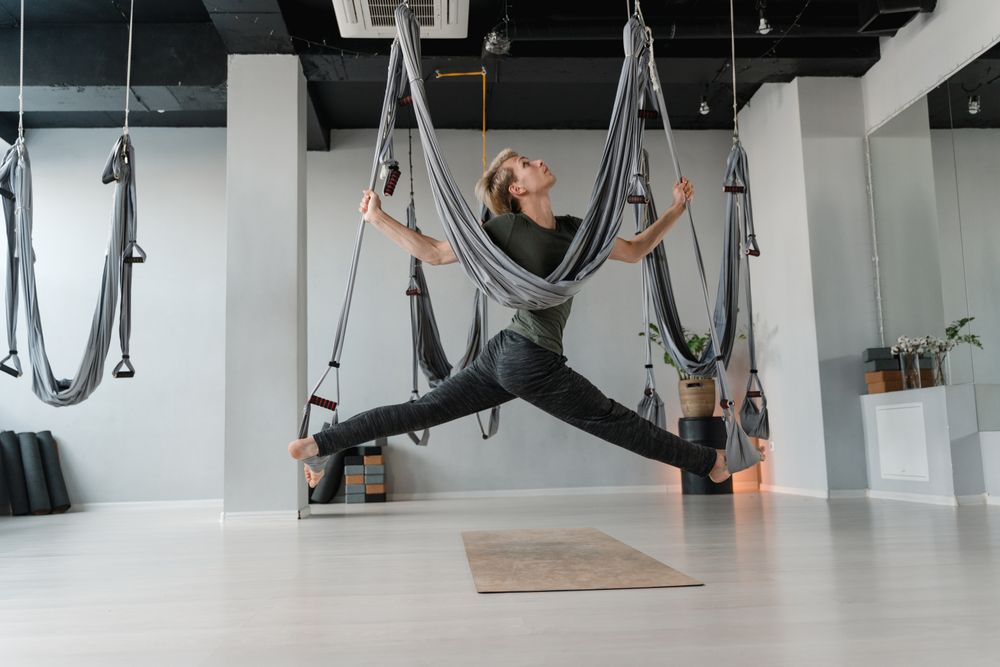
Aerial Yoga is an approach to yoga in which a specially suspended fabric hammock accompanies movement. Depending on the class, the fabric can provide support or act as equipment you interact with. Floor-based work and hammock-based sections may be combined in different ways. Defining Aerial Yoga only by being airborne or reaching a pose seen in a photograph narrows the experience unnecessarily.
You may also encounter names such as hammock yoga or aerial yoga in class descriptions. Similar names do not mean identical content. The kind of fabric, the teaching approach and the flow of the work can vary between programmes. Having heard a term does not mean you already know every detail of the class. Learning about the current content directly helps you make a more informed choice.

Social media often highlights short, visually striking moments. Becoming familiar with equipment, understanding guidance and getting to know the experience are also parts of the process. You do not need to assume that an advanced-looking pose must happen during the first visit. Likewise, do not assume every session is only relaxation or only intense exercise. Clarify your expectations against the actual class flow.
Before starting, useful questions include: How is the fabric introduced? What information is given to people who have never used a hammock? During which parts of the class is the equipment used? What should I know about participation and preparation? While exploring the answers, explain your previous yoga or movement experience. Having none is not a barrier to asking for information; it is simply part of the introductory conversation.
For clothing, ask about the details specific to a hammock-based class rather than rely only on general sports advice. Learning beforehand about clothing in contact with the fabric, accessories and what to bring makes preparation easier. Do not try to change the equipment setup or adjustments based on methods seen online; direct equipment questions to the person responsible for the class. This also helps clarify conflicting expectations from different sources.
When working with unfamiliar equipment, being able to describe your experience matters more than finding a fixed answer about what you should feel. Hearing an explanation again, asking what a term means or requesting more information about a section are natural parts of learning. If you have an individual question about whether participation is appropriate for you, discuss it with the relevant professional rather than try to resolve it through general promotional articles.
After the session, look beyond how you appeared in a photograph. Reflect on the setting, the explanations and your experience of working with the equipment. What interested you, what would you like to understand better, and does the class fit your schedule? Exploring Aerial Yoga begins with making room for your own questions and preferences, rather than reproducing someone else’s pose.